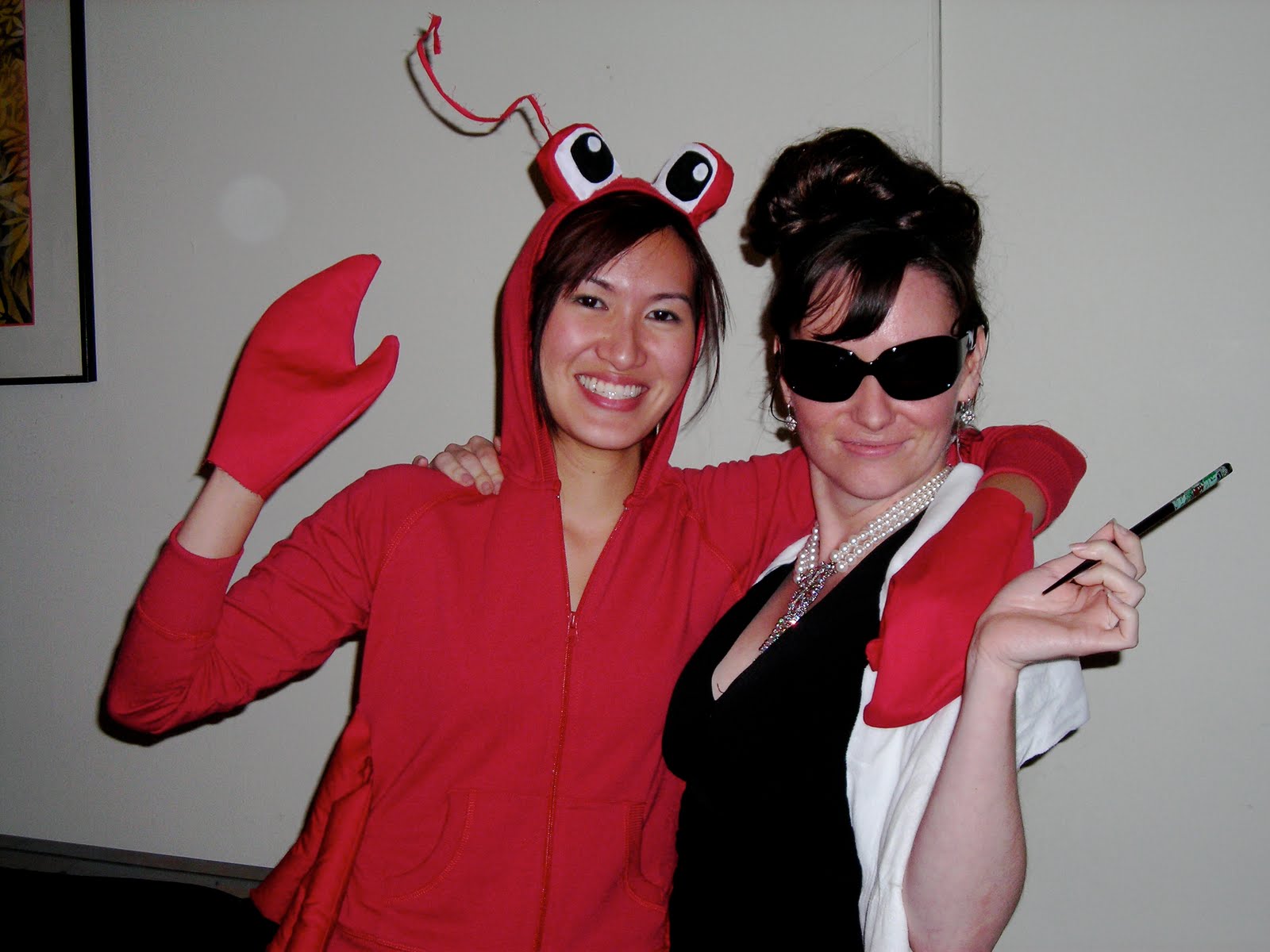
Flavor #8 - Attend the Oprah Show


Attend the Oprah Show - Kristine Lorenzo, Chicago IL


Thank you and see you soon! Teresa Audience Team"


I stared blankly at the computer screen. It seemed impossible. In the six years I had lived in Chicago, not once had I ever been able to get tickets, but this Thursday I was going to see the big "O" herself:

Oprah Winfrey

When my roommate, Kristine, suggested I attend the Oprah show for one of my 31 Flavors, it was really more of a joke. We both knew what a hassle it was to get tickets. Not that I had spent every waking moment trying to do so, but my friend Kara I had spent multiple days (ENTIRE days) during the reservation window, calling in. All of our attempts resulted in countless busy signals, and finally, after a couple years, we kind of gave up.

The only reason Kristine even suggested we go was because her boyfriend, Rob, had a friend on the staff, and it was Oprah's last season After some obnoxious begging, Rob made a quick call to this friend resulting in a tentative promise to get us on the show. About a month later, this "friend" who was actually more of an acquaintance, seemed to have forgotten the whole thing. Well, what had started out as Kristine's little joke was now on the list so I really couldn't turn back. I decided to take matters into my own hands and make a little visit to:

Oprah.com

The website was vibrant and buzzing with all of Oprah's latest endeavors. I located the "Be On The Show" section and was surprised to quite a few last minute reservation opportunities.


Perhaps I had been a little hasty in abandoning the Oprah quest.

I signed up for all of the topics, as well as the weekly emails, and crossed my fingers. Over the next couple weeks, after all of my submission were denied, I began to lose hope. Then, one day I received an email announcing that the show had extra tickets for three tapings. Right away, I replied, and about a week later, I received a curious looking message in my inbox. I clicked on the heading, expecting it to be another rejection, but instead it was a cheerful confirmation that three of my friends and I were reserved for the upcoming Thursday morning taping.


Three days later at 5:00 AM, Friends 1 and 2, my roommates Jeannette and Kristine, joined me on a brisk walk to the bus stop. Halsted, normally a rather lively street, was deserted. Eagerly we boarded the bus. What would the topic be? Would there be any celebrities? Would we get any free stuff? This enthusiasm greatly contrasted the other passengers, probably on their way to work. This energy didn't last long; a few cheese sticks and a granola bar later, our lively chatter dissolved into silence and each of us sleepily retreated into our thoughts.

The bus dropped us off on the empty streets of downtown Chicago and we walked west in the morning gray towards Harpo Studios. As we approached the oddly shaped building boasting a very large "O," we could see there was already a long line wrapping around the corner. Gratefully the line was indoors. We met Kara, Friend 3, at the tail end of that line and crammed our way in out of the Chicago cold. Inside you could hear little clips of Oprah-inspired prattle, everything from free cars to Oprah's weight. I wondered what it would be like to have this many people on a daily basis discussing your weaknesses and strengths.
I'll bet Oprah's nose itches a lot.
Once the doors opened, the line moved quickly, and after we checked everything, including my camera (There are very few pictures this blog entry), with security we were filed upstairs to wait. And wait we did! After signing some forms and the optional "No Phone Zone Pledge," there wasn't much to do but sit and people watch.
It was apparent that some of these ladies were taking the Oprah Experience very seriously. Two women in particular caught our eye; from the color of their hot pink and sky blue suits, that's exactly what they intended. They could have been a set of barbies; same height, build and long golden hair. I sized up our group; we couldn't be more different from each other. Kristine was very sleek yet edgy; Jeannette, tussled and spunky; and Kara, as always, very composed and classy. We were four friends in a room full of women of all shapes and sizes, backgrounds and passions, yet all of us had at least one shared interest: Seeing Lady O.

Finally they called our numbers and we filed back downstairs into the studio. I was surprised at how large it actually was. After looking about, I realized the camera only shoots the lower level of seating closest to Oprah, but apart from that section there were at least 250 seats divided into four other sections. Our group was directed to the house left section about 5 rows up. The studio was fantastic. Kristine mentioned how the lighting made everyone look pretty. Fascinated, my eyes explored the studio from the lights and cameras to the people. My eyes came to rest on a blond girl that looked really familiar. After some deliberation with Kara we concluded it was the actress who played Chloe on Smallville, and the brunette sitting next to her: Lana Lane. For a brief moment we excitedly fantasized that maybe Oprah was interviewing "Clark Kent" himself, but then realized that Chloe and Lana probably just wanted to see Oprah too.

Some upbeat music began to play and a delightfully energetic woman, who seemed to be in charge of the pre show warm up, got us on our feet. She pulled some obviously devoted fans from the audience for a brief dance party and some mini interviews downstage. After the thrilled bunch returned to their seats, she opened up the interview to the entire audience, asking if anyone had a story about survival. Several raised their hands and shared intimate stories about surviving diseases and natural disasters. She used used this little gear change to transition into the show topic: last year's NFL boating tragedy. Immediately my mind flashed back to a picture of a lone man in an orange jacket clinging to the rutter of a capsized fishing boat. I could vaguely remember reading that three others, including 2 NFL players had been lost at sea. Oprah would be interviewing Nick Schuyler, the sole survivor, and discussing his book, "Not Without Hope."
I may have been a tad disappointed that she wasn't interviewing Colin Firth, but my curiosity was piqued.
Before Oprah's grand entrance, our pre show host attempted to lighten the mood by asking if anyone had any good news to share. Jeannette and I shot up our hands and were a little shocked when she called on us. Jeannette elbowed me with her eyes, and I stood in front of Oprah's entire studio audience to boast a little about my 31 Flavors project and the unexpected success of pulling off #8, "Attend the Oprah Show."

Not long after my mini speech, an excited buzzing started, signaling Oprah was near. She entered into a flood of applause and a very appropriate standing "O." I was amused to see that she was barefoot, high heels in hand. Women ecstatically poured over the railing at an attempt to touch the Queen of Talk, and Oprah graciously stopped to shake their hands.

As she settled into her chair, she encouraged the audience to do the same. She put on her heels, remarking that they were only "sitting-down heels," not "walking heels." Oprah seemed extremely at home. You could tell that this was HER studio, and that she'd been doing this for years. She greeted the audience and made a few comments about her dogs, cracking jokes about their potty habits. These rather ordinary comments were rewarded with adoring laughter. I wondered how it felt to be surrounded by hundreds of fans lapping up, no pun intended, your every word. Being a performer, I've often been the center of attention (of course on a much smaller scale), but I was a character in a fictional story, speaking written lines. Oprah wasn't playing a character, she was playing herself, and she did it very well.

After a mini conference with who looked to be the producer or main cameraman, she welcomed Nick to the stage. Nick was your typical college jock: good looking, clean cut, and built. Looking at him you wouldn't think that he was about to relive the worst hours of his life. Oprah switched into a very focused mode, signaling we were about to embark. All of the crew manned their stations, the audience hushed, and the producer gave her the green light.

Oprah set the stage, churning images of a fishing trip turned tragic after the reckless decision to tie a lodged anchor to back of a fishing boat led to the fateful capsizing. Nick described how the four went from an almost amused shock that they had flipped the boat to unsettling worry when they couldn't flip it back over. When the night fell and the water turned violent, that worry evolved into horror. As the waves constantly crashed against them, they did their best to hang onto the boat and their hope, often speaking of their loved ones and regrets.

Oprah expertly crafted the interview, asking very broad questions, then whittling the story down to specifics. She was a master in that she didn't force him down a certain path, but created a space for him to unload his story in a thoughtful and sequencial way. That story turned grim as Nick described how hypothermia took hold of Marquis Cooper and actually turned his own mind against him. Solemnly he described the struggle to keep Marquis from removing his lifejacket, the moment Marquis stopped struggling, the awful acceptance that he was dead, and the sobering realization that Corey Smith was starting to show the same symptoms. Although I knew how the story ended, I kept hoping that they would get rescued, but one by one Corey Smith and eventually Will Bleakley, Nick's best friend, slipped away.

At times, Oprah really had to work to extract the story because Nick had removed himself to some extent. The only time he came close to breaking was when he spoke of Will, who he credited with saving his life. As we weaved through this intense timeline, I couldn't help but remove myself as well. Spending a big chunk of my life in the theatre, I was intrigued by the inner workings of the show. From where I was sitting I could see the main camera and how the producer expertly edited the different shots of Oprah, Nick, and tearstained audience members, together to create his masterpiece on the back screen. I also loved the fake commercial breaks and the process of switching from recorded footage to the interview. The entire crew, Oprah included, conducted all of this flawlessly. Lady O was a pro.

As the interview slowly came to a close, Oprah guided Nick through the hours he spent completely alone and wondering when his sanity would start to resemble his ragged body. He recounted the desire to live and the act of finding strength when he was sure he had none, the indescribable relief when he was finally rescued, and the long road to recover what was lost during those 43 hours at sea. Oprah didn't shy away from bringing up some of the controversy surrounding his book including the bad blood it has created between he and some of the families of those who had died. Nick admitted his relationship with Marquis' family was not where he wanted it to be because he had never found the words to explain in person what had happened. Oprah then said something that really struck me. She said,

"For everybody, there comes a moment when things need to be said and everybody always wants to know the answer to the question, 'Why?' ... Particularly when somebody dies or there's an awkward situation. You don't know what to say, so you end up saying nothing. And then that nothing ends up creating really bad feelings because somebody should have said something." She continued, "If you can, just say, 'I don't know what to say."
Oprah wrapped up the show and after chatting with us for a bit, bid us farewell. The stage came alive, and the crew started to set up for the next taping. It occurred to me as we made our way down the aisles, that although Nick had survived the accident, he would be surviving that dreadful experience for the rest of his life. The family members of those who died are surviving losing a son, brother and husband. I looked around once more at the variety of people I had just shared an audience with; everyone leaving that studio was a survivor of something tragic, the loss of loved ones, dreams, health. My aunt refers to us as "The Walking Wounded," meaning that everyone has some heartache that we can't see on the outside.

I find myself wondering how Oprah survives being Oprah? We see a rather glamorous version of her life, but I'm sure has her low days, just like everyone else . What kind of price does she pay in giving so many people access to herself? This studio wasn't an arena; I was on one of the back rows and I was probably only about 20 feet from her. She does that every day...sometimes twice a day. So, how does she find the strength to share her failures as well as her triumphs. How do any of us?

I looked at my diverse and delightful friends and it became very clear to me. When I'm lost and feel as though my sanity will crack, I find shelter in my friends and family. I'm so grateful for the love that makes the good times better and that same love that helps me survive the rest.


Have an opinion about what you just read? Leave a comment! Don't have a Google account? No problem. Just click the anonymous option.

Flavor #7 - Learn German and Visit Germany


Learn German and Visit Germany - Me


"Why German?" This is the question most people ask when I tell them about my latest Flavor. I suppose most of them are wondering why I don't pick a language more widely used in America, like Spanish; or why I wouldn't want to learn a language that was more pleasant on the eardrum, like French.

The answer is not a very simple one, because truthfully, I'm not even sure why. For some reason over the years I've developed a fascination with the country's history and formed deep connections with those who either grew up there, or by some twist in life, lived there for a time. It seems that my path constantly intersects with opportunities to know more about Deutchland, so when I was picking a language for my 31 Flavors list, it seemed very natural to:

Learn German and Visit Germany.

My opinion of Germany wasn't always as romantic as it is now. When I was young, it seemed that whenever I saw Germans in a movie, they were usually Nazis and the language was being barked in some harsh way; Indiana Jones was always fighting them, and the VanTrap family barely escaped from them to the Swiss Alps. Even when I was older, if there happened to be good Germans in a film, I almost forgot they were German because they usually didn't have the German dialect.

Subconsciously I'm sure that I thought of the language as angry, and the people who spoke it as "the bad guys."

Studying the Holocaust in junior high didn't help much. I remember the Diary of Ann Frank, as well as other stories of the concentration camps, chilling me to my bones. I vividly recall a nightmare where I was frantically searching for my younger sisters only to hear that they had been taken to the gas chambers. I awoke in an awful panic and stumbled through my sleepy fog to their bedroom to make sure they were safely asleep in their beds. I remember being so relieved that it was a dream, and going back to bed thoroughly convinced that things like that only happen in bad countries.

My first year of college, it finally occurred to me America wasn't the center of the universe. I began dabbling in foreign cinema, and became quite fond of British and French films. I wasn't until I returned home for the summer, that I watched my first German movie: "Run Lola, Run." My younger sisters and I were were sucked into Lola's 20 minute race to save her irresponsible boyfriend from desperately holding up a grocery store. The movie literally is a race because Lola very rarely stops running the entire 70 minutes. The movie is full of fun quirks, like an animated Lola charging up and down flights of stairs, brief encounters with strangers unravelling a flood of foreshadowing snapshots, and three different endings. The action is underscored by a pulsing beat with lyrics like, "I wish I was a Person with Unlimited Breath; I wish I was a Heartbeat that Never Comes to Rest," and only stops for a couple brief scenes, including flashbacks with Lola and Manni. It was during one of these flashbacks, with Lola and Manni lying in each other's arms, whispering intimate insecurities about love, that I remember thinking, "Wow, this language is beautiful."

A few years later, I left my roots to explore the Chicago stage. I remember the first time I met Katherine. I was the new girl at church, sitting quietly by myself, when a tall, beaming face approached me. She was charmingly inquisitive and I liked her almost instantly. Quickly I learned that she grew up in Germany; her parents were both American and had moved there after they were married so that her father could pursue his career as an opera singer. Katherine had recently left her roots behind to move closer to her older sister, Elizabeth, who was tutoring in Chicago, and to study acting at DePaul University. The fact that we were both actors gave Katherine and I an unspoken understanding and we quickly became friends. Her English was so flawless that I would often forget she had spent her whole life in a foreign country; until she'd say something about the cereal she had as a child, or break out into German while talking on her cell phone.

It was around this time that I took a more mature interest in the Holocaust. I poured over books like "Schindler's List," and "A Man's Search for Meaning" as well as documentaries and movies on the subject. These heavy stories, inspired many emotional phone calls to my family where I tried to express how much I loved and appreciated them. I seemed incurably fastened on the injustice and grief, and the thousands whose lives had been torn apart. Then somehow, in the middle of all my horror with this country's history, my intrigue switched to the country itself. I wondered about the German people, the individuals living there, and how they felt about this black mark on their country's history. My childhood was filled with 4th of July fireworks and the Pledge of Allegiance. When September 11th happened, millions of windows all over America proudly displayed the stars and stripes. Katherine told me that growing up, she had never experienced that sort of pride.

I felt sorrow for the horrible things that had happened there, but I also felt sorrow for this country that seemed to still be repenting of its past.

Over the next few years I formed other friendships with German ties including a brief long-distance relationship with Jason, a structural engineer living in Philadelphia, who had served an LDS mission in Germany. Sometimes in our late-night conversations I would request he speak to me in German. As the complex vowels and consonants tottered off his tongue, I could visualize Lola and Manni whispering to each other in the dark.

My relationship with Katherine and her family grew as well. I have lovely memories of choreographing silly skits, bawking Christmas carols, and listening to her father's beautiful bass voice cascading over my church congregation.


When Katherine moved away from Chicago, I became very close to her sister Elizabeth, the wonderful woman I've talked into taking this trip with me.


It was through these amazing people that Germany became more to me than the place where the Holocaust happened or the Berlin Wall came down. It became Katherine and Elizabeth's home. It became Jason's treasured two years abroad. I can feel how much they all love Germany, and my love for them has translated into love for their country as well. I'm excited to learn this language and visit this place so dear to their hearts.


Flavor #6 -Take a class at The Actor's Gymnasium


Take a class at the Actor's Gymnasium - Blair Robertson, NYC


February 12, 2010

I've never known how it feels to be tall. Being 5'4", I've done a lot of standing on my tiptoes, whether it be to reach something on the top shelf, to hug someone, or to see over a crowd of people. Today, however, I got a taste what it feels like to look down on everyone--literally.

Stilts:

As I sat on a pile of gym mats, Ginger and Jane busily applying straps to my feet, ankles, and calves, I reflected on my limited experience with stilts. I was very young and my dad had brought a homemade pair to a family get-together. These particular stilts were made out of wood with holds that stretched from your toes to your shoulders. I remember my dad and uncles walking quite successfully as well as some of the older cousins. I, however, could barely balance on the narrow wooden ledges, let alone walk.

The tingling sensation in my calves and feet signaled they were done. I looked down at my newly applied extensions. The boards only came up to my knees and were bound so tight, they resembled splints. Nate came over to inspect the work of my cohorts. Once he verified the straps were applied correctly, he extended his hand. With him on my right, and Ginger on my left, I shakily rose and left the mats behind.

Nate instructed me to keep my supportive leg straight and only bend the knee of the stepping leg. I tried not to think about the fact that I was now over 7 feet tall, and enthusiastically attempted to comply. The result was very similar to a baby giraffe learning to walk. After some quick correction, however, I was making shorter, more stable steps.


It wasn't long before Nate started to test my balance. His arm subtly moved from my elbow to my wrist, until eventually he had moved to the front and Ginger had trailed away. The next moment reminded me of learning how to ride a bike, and the first time realizing my dad had let go of the seat. Nate was holding both my hands; I was attempting to look ahead as he instructed, and then suddenly he wasn't there anymore. I actually took a few steps solo, before my mind figured it out, then began to fall. Nate was right there to catch me. This outcome was much less painful than the rose bush that broke my bicycle fall. After a moment of gathering my balance, I tried again. I was amazed at how quickly my body adapted to the movement.

After a I had made a couple turns about the room all by myself, Nate requested I try to take longer strides. This required a lot more control and grace. Each time I lost my balance, and wanted to go stiff, Nate encouraged me to make short, quick steps to get back on track. The elevated floor gave each step a little spring, almost as if I was part human, part pogo stick. As I swished my long legs through the air, I couldn't help but feel like one of the mystical creatures
in a Jim Hensen movie.

Poi:

Reluctantly I said goodbye to the stilts. They were the first thing I felt mildly good at.


Next, Nate pulled out a carton of brightly colored Poi. Each of us took two. I smirked at how closely they resembled some of the socks that I pull out of the drier, when one sock gets lodged inside the other.

Following Nate's example, each of us laced our pointer and ring fingers through the loops and clasped them together with our thumbs. The hold was important; otherwise, your thumb could snag on the material, or interfere with the angle of the spin.

Elbows tucked and palms up, he started us out with a basic circular motion. Almost all the movement came from a steady rotation in the wrist. From there he moved on to the more complex, figure eight pattern. I found that switching from the basic movement into the figure eight was pretty easy, but switching back could be very intimidating . That's because the timing was everything. It felt very similar to jumping rope; you had to feel when the moment was right and go for it.


We ended with some circling in front and overhead. This movement felt pretty natural with my left hand, but my right had a hard time. The trick was to lead the Poi in the direction I wanted without disrupting the momentum. Of course, with spinning slingshots, that's easier said than done.

Nate had mentioned that originally Poi was used as a weapon. After accidentally clobbering myself a couple times, I could envision it.

Have an opinion about what you just read? Leave a comment! Don't have a Google account? No problem. Just click the anonymous option.
February 5, 2010

I had missed my train, so I was a good 15 minutes late. Quickly, I scampered down the stairs of the station, over the snow covered yard, toward the golden light that was the Actor's Gym. As I approached the entrance, I threw a quick glance at the frosty windows. I could make out some of my fellow students practicing their juggling.

After changing from business casual into "very casual," I slipped inside. I noticed that we had a newcomer; a spunky redhead named Ginger. To my joy and relief, it looked as though Ginger was on the same level of juggling as I. I could have hugged her.

Juggling Clubs:

Not long after I arrived, Nate announced that we were going to juggle clubs. Stifling a groan, I collected two clubs from the bin and proceeded to distance myself from everyone else. I had a hard enough time juggling two balls; all I needed was to smack one of the other students in the head with a large bowling pin. First, Nate showed us how to flip a single club from one hand to the other. Surprisingly, the grip should be closer to the body of the club, rather than the knob, so that you have more control over the flip. After practicing this for a while, we moved on to holding two clubs, crossed in one hand, then flipping the top club to the other hand. And that's about as far as I got. Overall, the concept was the same as juggling balls: the placement of the hands, the arch of movement. Just, instead of juggling of smooshy, beanbags, you're juggling hard, miniature bats.

FYI: clubs hurt.

The Unicycle:

To my delight, Nate put the clubs away and brought out 4 or 5 unicycles. I had been looking forward this. Not that I thought I'd be any good at it, but my curiosity was thoroughly piqued!

Nate climbed onto this one-wheeled bronco and it seemed to jerk to life. As he demonstrated the movement, he stressed the importance of giving the seat your full weight and engaging the core while leaning slightly forward. From the looks of it, there seemed to be a delicate balance between leaning forward and falling forward onto your face.

While Nate and Jennifer helped spot Ginger, I attempted to find that balance.

Using the railing of the risers I propped myself onto the bike. I found that pressing down on one pedal actually propelled me onto the seat, while the other did the complete opposite. Once in the saddle, I just sat there, rocking back and forth, attempting to find some shred of control. When I finally accepted there wasn't any, I slowly inched forward, grabbing at the wall, the garbage can, anything within reach. Although I was very persistant, this effort did little to prepare me for the real thing.


When I finally started working with Nate, I was able to fully grasp the fun, yet terrifying, exhilaration of it all. Once again, I was completely in the moment, trying to balance, pedal, and take direction all at the same time. During all this chaos, for a surreal moment I could feel exactly where my body needed to be, but then gravity would literally jerk me back, or forward, into reality. Thank goodness for my spotters! Another great thing about this class; it forces you to put your trust, literally at times, in the hands of others.

The Tightrope:

We only had about 10 minutes or so to try out the tightrope. I've done a bit of slack-lining, so the fact that the tightrope stayed in place, instead of swaying and sinking beneath my weight, was big plus. From the moment I took my first step, my toes started to cramp up as though they had looked down and were instantly paralyzed. The tightrope we were using was only about 5 feet off the ground. I couldn't imagine performing in the circus and experiencing toe cramps, sixty feet in the air.

After my toes relaxed a little, I was able to balance for a few seconds on each foot. I think with a lot of practice, and a little more potassium, I'll be able to have some fun with that one.


I think what I like most about this class is that I have to turn off the analytical side of my brain, and rely on my instincts. As someone who often thinks too much about things, this is good for me.

Have an opinion about what you just read? Leave a comment! Don't have a Google account? No problem. Just click the anonymous option.


January 29, 2010

The tag line on the Actor's Gymnasium website reads, "Learn to Fly." Fitting, considering the company is best known for its circus and aerial arts classes. The beginning aerial arts class features such skills as Silks, Spanish web, trapeze, lyra and straps. For those of you who don't know what most of those are, all of them have the potentiality of breaking my neck. It was this slight concern that inspired me to register for the Circus Ground Skills class. This way I could keep close to the, well, ground.

The gym was not unlike a Black Box Theatre. There were risers about 5 rows high, and a raised floor stretching forth like a grand proscenium stage. The room's large wooden pillars drew my eyes upward to a web of curtain rods, lighting beams and other exposed piping. As my gaze returned to the ground I noticed that there were large windows where the stage left wall should have been. It looked as though we were going to be exposed a little as well.

Nate, our instructor, was tall and athletic with curly hair and glasses. I took the fact that he was barefoot as an invitation to remove my own shoes. The floor was surprisingly springy and the plush carpet felt cushy beneath my feet. I resisted the urge to leap and twirl, and sat in a circle with the rest of the group.

As we introduced ourselves we discovered that most of us, including Nate, were actors looking to add to our bag of tricks. Nate explained that the first few weeks would be a brief introduction to a variety of ground skills, and the rest of the sessions would be open to experimentation on what we had learned and focusing on our individual goals.

After a quick warm-up, we played a game of catch to help learn each other's names. As we tossed the beach balls of all colors and sizes, Nate stressed the importance of rhythm and the importance of a good toss. At the time, this exercise seemed a tad elementary. Little did I know how much those basics would come into play.

Juggling:

Nate dragged out a carton of juggling balls. I picked out one ball and began practicing the arch from one hand to the other. So far so good. Optomistic, I took a quick glance around the room. To my astonishment, and mild irritation, everyone else in the group already knew how to juggle three balls. The only student with less experience than me was Richard, the twelve-year-old visitor from the younger class!

Feeling about the same age, I continued my pathetic tossing. Pretty soon, Nate brought over another ball. Although I protested, he assured me that I was ready to add another to the mix. Turns out juggling can be pretty good workout when you're bad at it!I was dropping a ball pretty much every other toss, so I basically did squats and lunges for a full twenty minutes. I really had to fight the urge to hold onto the remaining ball until the tossed ball was safely in the other hand, but eventually, with the help of my audible chant, "Throw, throw, catch, catch," I was able to release at the appropriate time.


To my horror, Nate decided to pair us up. I immediately felt pity for my partner. Luckily, I was paired up with Jennifer, a juggling instructor for another gym. Nate instructed us to stand across from each other, place the opposite arm behind our back, and with our free hand, juggle three balls between each other. Nate was right; The throw was everything, and my throws were a complete disaster. But eventually they improved and I think that this exercise forced me to progress at a faster rate because I was trying to match Jennifer's speed and precision.

Afterwards, Jennifer gave me some instruction. She said that my hands should stay relatively in place, like I was holding a tray. She also recommended I practice serving with both hands. Crazily enough, with these pointers, I started to develop a rhythm. Granted, I couldn't catch anything without my chant, but I definitely felt better by the end of the half hour.

The Globe:

I was very happy to find that everyone was on the same level when it came to the Globe. With Nate spotting, each of us too k our turn clambering up the ball and trying to balance. I was lucky number 2. It seemed that as soon as I mounted this blue, oversized marble, it was determined to buck me off. The thing was completely solid and reacted to every step that I made, so my reaction was to cling to Nate and go stiff as a board. Surprisingly this approach didn't go over so well. The correct method was to constantly move your feet, lightly and with a slight rocking motion. When falling, you needed to move your feet even more to get back on track. This contradicted everything gymnastics and dance had ever taught me about balance. I couldn't see how walking like I was on hot coals, could keep me upright.

Everyone's second try went a little smoother. Nate's main advice for me was to look out in front instead of at my feet. I actually balanced for a marvelous three seconds, but probably more of a fluke, because I still have know idea how the movement and the balance are connected.


The beautiful thing about juggling balls and balancing on a globe is that you are forced to be completely in the moment. There is no time to think about anything but catching that incoming ball or not falling on your face. It makes me realize how rare it is that I am completely in the present, and how much I'm looking forward to the next time.


Have an opinion about what you just read? Leave a comment! Don't have a Google account? No problem. Just click the anonymous option.


Sprinkle #2 - On December 31, give 31 dollar bills to 31 individuals less fortunate than you


On December 31, take 31 dollar bills and give them to 31 individuals less fortunate than you - Jan Hillman, Sacramento CA


I quietly stamped my feet to keep warm. The air was thick and frosty, and as I peeked out from under my hat, I could see the tops of the buildings dissolving into the soupy sky. The light turned green. With a grumpy shiver, I buried my chin deeper in my scarf and crossed the street, 11 one dollar bills clenched tight in my wool-covered hand. Eleven dollars isn't much, still it could pay for my portion of the electric bill or even tomorrow's lunch. However this New Year's Eve I was planning on giving it all away--to complete strangers.

Earlier that day, I had tweaked the rules a bit and donated $20 to Interfaith House Chicago, an organization that helps ill or injured homeless adults get back on their feet. Not that I didn't appreciate the cleverness of the idea, and not that it would be very difficult to find 31 people in need, especially in downtown Chicago, but I wasn't positive that giving out dollar bills was the best way to help. So I had silently made a deal that I would give out whatever I had in my wallet, and donate the rest to a charity. I chose Interfaith because earlier this year I suffered a kidney stone and though I had medical attention and friends to ease the burden, I felt more helpless than I ever had in my life. It gave me comfort to know that there was a place in Chicago that cared for and inspired those truly without help.

So there I was, armed with $11, searching, in bone-chilling weather, for someone in need. As my eyes darted from face to face, I reflected on my first year in Chicago, and the pity I used to feel at the sight of an outstretched palm. Six years and hundreds of palms later, that pity can turn to indifference, even resentment. Just as you layer on the clothes to shut out the cold, eventually you layer on the cold to shut out the people.

I had to be to my friend's house at 6:30, meaning that I had to find eleven people, run an errand, and be on the train in an hour. I found it ironic that when I was actually willing to give, I couldn't find a soul.

As I neared State street all of that changed.

There was a man standing on the corner, sucking what he could out of a tiny cigarette butt. It was actually a relief to hear him asking for change. I don't remember much about him, but I do remember that his shoes were held together with duck tape and that he didn't have any gloves. The gloves, I remember, because for a brief moment, while transferring the dollar from my hand to his, our exposed fingers made contact. I almost recoiled, and instantly felt ashamed. A simple touch, an action that happens all the time, suddenly felt too personal. I realized in that moment that I had already judged this man that I knew nothing about.

As I walked on, I made a promise that at least for the next brief ten dollars, I would try to truly remove all judgement from my heart.

Just then I passed a McDonald"s. Through the window, I could see a man haggard and heaped in one of the stalls. Quickly I slipped inside, grateful to be out of the cold for a moment. As I approached his table I could see the limited remains of a coffee and burger. With a bit of nervousness, I slid a single Washington next to his untamed fingernails. He looked up surprised and questioning, then nodded an appreciative "Thank you." Shyly, I nodded back and made my way back into the cold.

Soon I was at the corner of Randolph and State: the Shopping District. The streets were cheerfully alive with people shopping the post Christmas sales and getting ready for their New Year's Eve activities. A young man, who hardly looked needy, asked if I had a dollar. Normally this would annoy me, but without hesitation, I flashed him a bill, and he flashed me a surprised smile. I found myself smiling as well. It was a nice feeling, this willingness to give so freely.

As I crossed the other side of State Street I heard a familiar, pleading voice. I cringed. It was That Guy. He'd worked this corner for over a year, and I'm ashamed to say that I probably judged him most of all. Maybe it was because he was my age, and I was skeptical that he couldn't find some other way of earning money. The particular way that he whined, didn't help much. Begrudgingly, I reached into my pocket and forced my heart to soften. What did I truly know about this person? He could need that dollar more than anyone. I'd always had parents to bail me out of my unwise decisions. Maybe he didn't have that option. Humbled, I handed him the dollar. He paused to thank me, and then continued his standard howl. I hurried away before my heart hardened again.

Barely 10 paces away, I came upon a woman sifting through the garbage can for food. As I approached she looked up, her hands still buried deep in the trash. Her face was hollowed and her hair was gray, but I doubt that she was much older than forty. As I handed her the dollar, I couldn't help but ask myself,

"How did she get here? Was anybody looking for her? Did she have any children?"

Speaking of children; a few steps away the Bucket Boys were drumming away on their white pails. I had a fondness for these boys. Their intricate rhythms were as familiar to downtown, as the Chicago Theatre sign. For all I knew, they were more fortunate than me, still I placed four dollars, one for each of them, in their collection. As I walked away, infused by the beat, I breathed a quick prayer that the money would be used for good.

2 more dollars and 2 more people to go. I continued south on State Street. The lights and Christmas cheer seemed such a contrast to this world that I was experiencing. Days earlier, I had spent Christmas with my family. Those days were filled with gifts, an obscene amount of food and people I care about, who care about me. Life is sometimes hard for me despite the love of my friends and family. I can't imagine what happens to you when you believe that nobody cares about you.

If anyone had been following me, I'm sure they'd be mystified by the odd girl playing Robin Hood on New Year's Eve. I was starting to feel really good about myself, being so charitable and all. Maybe that's why, though I try my hardest, I can't seem to remember the last two people I gave to. I was so caught up in applauding myself, that I can't even be sure what gender each of them was. One thing I do remember is that one of them, I believe a man, said "God bless you." This blessing humbled me a bit, and as I wished him the same, I realized that I truly meant it.

And that was it. My pocket was empty. I had completed my mission, and all within 2 blocks.

Briskly, I crossed the street to the warm promise of H&M. I was returning a sweater that I didn't care for. Nobody questioned me as I walked into the store. I had a right to be there, however I'm sure most of the people I just gave money to, would not be allowed inside. The line at the register was overflowing with people buying outfits for their New Year's party. I couldn't help but recognize that this sweater would be considered a luxury to some of the people I'd approached tonight.

I could afford this luxury because my belly was full.

As I walked to the train, I silently hoped that no one would approach me. The bills I had designated were gone; I had done my part! I was slipping back into that indifferent state, already forgetting that while I was at this party, there were people out there who still needed to find a meal, or a place to sleep.

Now as I sit in my drafty, but warm apartment, I realize just how good I am at forgetting unpleasant things. All of the people downtown, me included, were partaking in the glow of Christmas, while people suffered right under our noses. Christmas is more than turkey and presents. It's a celebration of the birth of One who cared for the sick and gave shelter to the weary. If we believe in Christmas, doesn't that mean that we believe in taking care of each other? I know that it's a lot more complicated than handing out dollars on the street, but maybe we all could strip off a layer of judgement and be more of a shepherd to those in need.

*This blog entry, I'm grateful for the homeless man who asked God to bless me. He still believes in God, though he probably has every reason not to. I hope that those going through hard times can have faith that even though at times it may seem that the entire world has forgotten them, God has not, and never will.


Have an opinion about what you just read? Leave a comment! Don't have a Google account? No problem. Just click the anonymous option.

Flavor #5 - Make a Quilt


Make a quilt - Teria Brooking, Ogden UT


February 13, 2010

The Metra glided from stop to stop, a nice change from the clunky CTA. It was Valentine's Day weekend and I was on my way to Arlington Heights to visit my friend, Kara. She had heard about my quilting project and had offered to help me cut out all of my material.

After about an hour of reading and listening to a drunk man, no doubt inspired by the holiday, slur his opinions about love, I arrived in Arlington Heights. Kara met me at the platform and we walked the short distance to her apartment. Hanging out with Kara always makes me feel a tad irresponsible. Kara is 24, has a car, a fully furnished apartment, and shops at Tiffany's. I, on the other hand, am 31, haven't had a car in over five years, live like a gypsy, and make my own jewelry.

Kara had everything set up for our little project. It was hardly surprising that she had quilting equipment. We always tease that Kara is the mother of our group of friends, so out of any of us, she would be the one to have craftsy, grown up, things like a cutting board, template and rotary cutter.

Kara pulled out her rag quilt for some inspiration. A rag quilt simply consists of multiple squares sewn together. Squares of the same fabric as well as a slightly smaller middle layer of batting are sewn together with a large X. The individual sewn squares are then connected to each other with an exaggerated seam purposely showing on one side. After completing the quilt, it is washed to encourage the seams to fray, creating a fun, fuzzy, look.

The first thing we needed to do was to figure out the exact dimensions we wanted. Because Teria and I had originally bought fabric for a different pattern, we had figure out how to use what we had. I had about a 1/4 yard of each material, so it looked as though we could get at least 8 pairs of five inch squares from each. That meant we could either have 3 inch squares with an inch seam, or 4 inch squares with a 1/2 inch seam. I didn't want the frayed seam to overwhelm the actual square, so we settled on the 4 inch square.

I was grateful that Kara knew what she was doing. Little things like knowing which way to cut the material first to get a straight edge, or laying the fabric so that the pattern was cut in the direction of the threading, was extremely helpful. Like my grandmother, I'm a bit of a perfectionist, and I appreciated the care that she took to make sure that the measurements were exact.


Cutting the fabric was a little intimidating at first, especially the longer strips. This kind of mess-up was permanent. You can't just paste the fabric back together. I was more than willing to hold the template in place, and let Kara use her experienced hand with the rotary cutter. She joked that it was years before her mother had let her help cut the fabric. After a while I decided to take a turn. Of course, being left handed, I had to switch the tools around so that she could hold the template and I could cut. Kara had a self-healing board, but I was still afraid of cutting too deep, so often after running the cutter over the fabric, it would still be attached in several places. After a while though, I started to get better feel for the angle of the blade and the feel of it lined up against the template.

Kara and I made up a good team, and the cutting went quickly. It seemed, however, that every time she left me alone, a minute later she'd hear a gasp or a grown signaling that I had made some sort of mistake. Usually the mistakes were a result of me getting impatient. It was a tough lesson that a small movement from my wrist could skew the cut and ruin an entire square, however the fact that the outside of the square would be frayed anyway gave me a little more room to mess up.


We had an excess of some material and not enough of others. The green polk-a-dot fabric, originally intended for the backing, produced 13 squares, while we were only able to get four squares out of the tomato-colored scrap from Grandma. The solid fabric was cut so poorly by the fabric store that I decided to take it back instead of salvaging only 3 squares.

And that's what we did for several hours; cutting fabric, with Olympics playing in the background, pausing every once in a while to watch the men's speedskating or the women's freestyle skiing. The result was 61 nearly perfect squares of fabric.


Better than roses and chocolate any day...even V-Day.


Have an opinion about what you just read? Leave a comment! Don't have a Google account? No problem. Just click the anonymous option.

December 28, 2010

We were supposed to help with my cousin's rehearsal dinner in a couple hours. Once again, we were two women with two babies and too little time.


A couple days before we had gathered for a post Christmas dinner at an Aunt's house. I had spotted a charming rag quilt draped over the back of a chair. I know that rag quilts are usually made from scraps, but I couldn't help but be drawn to comfy feel of the frayed borders. Gratefully, according to Teria, this wouldn't be a huge switch from the pattern we were already pursuing.

So, there we were, back at the fabric store Teria estimated that we needed at least three more fabrics to complete the quilt. The colors that we did have were all very saturated, and she worried that the quilt would be too dark, so it was our mission to pick out some lighter patterns to balance it out more.

We were building on 6 fabrics, so the palette was a little more complicated than before. I was so grateful to have Teria there to help me think outside of what I would normally pick. She discovered a fun star pattern that made me

realize the petals on the fabric from Grandma were actually gold, not green. After sifting through countless amounts of boring beiges I was able to find a lighter version of the plaid that we already had. Finally, to tie it all together, we decided on a solid bluish-green material.


It was a little difficult juggling children and shopping but somehow we triumphed! On the way to Salt Lake City, I looked at my medley of fabrics and marveled that stars, flowers and polk-a-dots could somehow work together. Unfortunately it looked like the new plaid and the old plaid could not be friends, so I decided to abandon the old plaid for the good of the quilt.


I sat back in the seat, determined and delighted. I had my eight fabrics! Now I just had to put the silly thing together.

December 23, 2009

My sister, Teria, pulled into the parking lot. It was two days before Christmas, and about an hour before I had to be on the shuttle destined for Idaho. We both knew that if we didn't shop for fabric before the holiday festivities began, we most likely wouldn't get another chance. Unfortunately, my two nieces, Ivey and Georgia, were blissfully asleep in their car seats. As Teria turned off the engine, we debated what to do. Either one of us could manage one-year-old Ivey, but three-year-old Georgia was too tall and too unconscious to be held for a significant amount of time. I could shop while they all waited in the car, but being that I'm incredibly sentimental and that Teria had suggested this whole quilt idea, I had hoped we could work on it together. Finally, we settled on a plan. Carefully, we laid Georgia in a bed fashioned out of some blankets and a large Toys "R" Us cart. With me manning the cart, and Teria toting Ivey, we entered Joanne's Fabrics.

The fabric store was a familiar sight. Many of my early theatre costumes had started in such a place. My mother would buy the fabric, and my grandmother, a gifted seamstress and perfectionist, would labor over it until it was perfect. It didn't matter what role I had.


If I was a Bar Wench, you could be sure I was the best-dressed Bar Wench on stage.

Purposefully, we made our way over to the quilting books. I had browsed through different patterns on the internet, but hadn't settled on anything. As I thumbed through the different magazines, I began to feel very ignorant. There was so much that I didn't know, and frankly, didn't have time to learn. Teria had actually made quite a few quilts and could translate some of the jargon, but eventually we decided it would be best to ask the woman at the cutting counter for help.

The elderly woman eyed me over the rim of her glasses and asked how much sewing I did. I replied that I didn't. I half-expected her to roll her eyes, but instead she pondered for a moment, then led us back to the magazine rack. She pointed out a magazine that organized patterns by skill level. It also conveniently listed all of the required dimensions and even made fabric suggestions.

Gratefully, I skimmed through the magazine. While my eyes the coveted the workmanship of the more advanced level, I knew that I needed to be smart about this. This was my first quilt and there was no need to be over-ambitious. Reluctantly, I flipped to the Beginner section. There we found a simple, but fun pattern. By simple, I mean a bunch of squares sewn together. By fun, I mean charming and random fabrics.


So, we finally had a pattern; now came the hard part. Our caravan journeyed over to the fabric section. The quantity and variety of material was a little daunting. Gratefully, I had 2 pieces of fabric that I had inherited from my Grandmother's collection. Using this as our foundation, Teria and I started pulling bolts to add to the palette.

By this time, the girls had awakened from their surprisingly peaceful sleep. Unfortunately, this meant I would soon lose my shopping partner. Georgia was unimpressed by her sleeping quarters and Ivey was already pointing out every Santa item she could see.

While Teria chased her curious children around the store, I continued to sort through paisleys and polka-dots. It fascinated me that some fabrics just seemed to belong together, while others were an assault to the eye. Of course, I was just following my instincts. As far as I knew, my assortment of fabric could turn out to be a complete mess.

Teria had rounded up the girls, signaling it was time to go. I had settled on four fabrics in addition to the two from Grandma. I probably needed three more, but we were cutting it close, and there was a long line. Only in Utah would there be long lines at a fabric store. We ended up having the store hold the fabric, so that we could make it to the shuttle in time.

The shuttle pick-up was at a Flying J. Surprisingly I had some time to run inside and get Teria the cash to purchase my material. She had said fabric was expensive. I currently live in Chicago, the city with the highest income tax in the nation, so I took out $60.00.

When I arrived back at the car, I asked how much she thought it would be. She pondered for awhile, and I braced myself for the news. Finally, she answered, "Probably at least $20."


I love Utah.


*This blog entry, I am grateful for family, and for family traditions. At one point while we were shopping, Ivey came racing around the corner yelling excitedly, "Kackee! Kackee!", her attempt at my name. As I swooped her up in my arms, I felt so tremendously grateful to be an aunt, and to be continuing this quilting tradition with my older sister.


Have an opinion about what you just read? Leave a comment! Don't have a Google account? No problem. Just click the anonymous option.

Flavor #4 - Take an Art Class


Take an art class - Linda Shearer, Idaho Falls, ID


November 22, 2009

My left hand holds the paintbrush, the right hand rests in my pocket. This has become my standard painting pose. Today's class is the last of five, and the first time working with full color. I looked down at my palette, loaded with more variety than ever before. It was nice to see red and yellow. I had missed them.

I faced the still life. Random pieces of plastic fruit and glass bottles stared back at me. I breathed in and scooped some paint onto my brush. Because it was the last day, I refused to worry about anything. Today, I was going to have fun.

I started with the apple. The red on my palette was as cherry as a jolly rancher, so I deepened it with the chromatic black I had created with blue and brown. I applied this as the main color, then layered in oranges, and yellows, even a touch of lavender where the light hit the strongest. Crazily enough, I was pretty successful. Steve came over to inspect my work. Although I'm sure he disapproved that I was ignoring the other shapes, he didn't let on. Instead, he complimented some of the shading, and I restrained my usual self-criticism.

When I was satisfied with the apple, I moved onto the pear. This time I had fun trying on three or four shades of green. It seemed that a lot of the pressure I had put on myself was gone, so I could experiment. And not only did I experiment on the palette, but on the canvas as well. When I applied the wrong color, I just wiped the brush and tried again. This little action may not seem like much, but for me, it was truly a breakthrough! I no longer felt the need to judge myself or achieve results the same way as everyone else. I was figuring it out my way and loving it.

As always, the time passed by like nothing at all. In the last couple minutes of class I tacked a stem onto each, completing my fruit duo. They weren't much to look at, but they were mine, and more importantly, I had fun doing them. For the last time, each of us recycled what was left of our paint and returned our easels to the corner of the room. Because this was the last class, we didn't have the option of leaving the paintings on the drying rack. As I rocked my painting under the hand dryer, I reflected on the last five weeks; the Southpark recaps and the sports talk, the sighs of frustration and the tiny victories. It had been a bumpy ride, but surprisingly I wasn't discouraged.

Who knows, I might just show up at Lill Street again someday soon.

Life Lesson:

1. Be more afraid of the chances not taken.

On our first day of class, Steve had warned that our biggest hurdle would be the critic in our own minds. He wasn't kidding. If we let it, that critic can prevent us from becoming who we could be. I don't want to wake up one day, an old woman wondering what I've missed out on because of self-doubt and fear. If anything is going to hold me back, it shouldn't be myself.


2. You don't always have to know the outcome.

After class, Steve and I talked about figuring out your process, and allowing that process to change even when you finally have it figured out. I've discovered that I really like to have things figured out. These life lessons at the end of each entry is evidence of this. It's almost as if I need to have learned something, or the class isn't worth it. But more and more, it seems that you have to just let go and see where life takes you, and if you don't end up where you thought you would, that's okay. Even now, as I'm writing this blog, I feel the need to formulate the thought completely and cohesively before................typing. Sometimes I just have to throw words out on the page and let the point of the piece reveal itself as I go.

3. Being uncomfortable isn't always a bad thing.

I'd be lying if I said I'm not a little relieved that it's over. I have a hard time participating in things that I'm not naturally good at. However, I think that uncomfortable state is important in our progress as human beings. We can either turn and run, or grit our teeth and push through the conflict. There were a couple times that I just wanted to give up today, but I pushed through and was able to enjoy some of the fruits, pun intended, of my labor.

So, this blog entry, I am grateful for that little voice inside that fights to be heard even when my fears try to drown it out. Hopefully one day, it will be the stronger voice.

Have an opinion about what you just read? Leave a comment! Don't have a Google account? No problem. Just click the anonymous option.

November 15, 2009

It occurred to me as I nibbled on a blueberry scone, still warm from the cafe downstairs, that I'm not very good at this.

I was laying down the foundation for one of the glass bottles and thinking how unlike glass it appeared. Normally this realization would cause me stress. Today, however, I calmly bobbed my head to Wilco, and scooped some green onto my brush.

Everybody else seemed to be very good at this. I glanced about the room, taking in the variety of style and color. I no longer remembered any of their names. Instead, I knew them by their professions: The nurse, the girl in advertising, the teacher, etc.

The nurse was quite talented. One moment she'd be working an outline, and the next she was transforming each shape into a living object. Of course, somehow we always ended up by each other. This constant reminder of my own inadequacy was always a boost. But even her natural and steady pace barely affected my mood. I think I was finally accepting that I had my own pace and set of struggles to work through.

Bored with the bottle, I moved onto the bowls. This was an attempt to apply Jason's suggestion of adding in the darks and lights as I go, instead of working one one section until it's complete. This is not how I like to do things. Maybe I'm addicted to that sense of accomplishment, but I like to fully finish a project then move onto the next. It's silly, but even my eating habits are evidence of this. I find myself consuming all of my mashed potatoes before moving onto my salad.

Well, my "salad" was now three blue bowls stacked on top of each other. They were metallic, so the light swirled and danced around the edges

in a frosty way. I thought it a shame that I most likely wouldn't have the time to figure out how to achieve that speckled quality because everything I did took so much time, and three hours just wasn't enough.

And that's what I've come to accept. It takes time to uncover your own way of doing things. It takes time to understand the paint. It takes time to transfer what you are seeing to the canvas. It even takes time to figure out which brushes you feel comfortable using.

And that's okay.

Life Lesson:

1. You are on your own schedule.

It's okay if it takes some time to figure things out. It's also okay if sometimes you never figure it out; at least you tried and know where you stand. How many years have I thought that I would be naturally good at painting, but never tried? Well, now I know that it's a lot more difficult than I thought. And that gives me greater appreciation for those whose paintings take my breath away.

2. "Failure is just the opportunity to begin again more intelligently." - Henry Ford.

Each class teaches me something new. Even though I may not recognize it, I am faster and smarter each time I go to the canvas.

Have an opinion about what you just read? Leave a comment! Don't have a Google account? No problem. Just click the anonymous option.
November 8, 2009

Have I mentioned that I medicate with food?

Here I sit in the First Slice Cafe, stuffing my inadequacy with a flourless, peanut butter cookie. A part of me doesn't even want to write. Today we explored the dead palette, and that's just what I produced: lifeless art.

The class started off well enough. Steve chose Radiohead as our musical inspiration. As a fan, I was delighted with this companionship however I realized that often my ears were anticipating my favorite lyrics instead of listening to the instructions.

I loaded my palette with warm colors like burnt sienna, umber, yellow ochre, and the usual black and white, and attempted to find the view I wanted. Once again, I tried to get the set-up perfect, flipping back and forth between the canvas and my viewfinder, and failing to actually make a stroke. I was perfectly aware that this kind of obsessing was what held me back the last class, so I made a conscious effort to restrain myself. I failed. Instead, I labored over every table dimension, and every object's proportions.


The first shape, a clay flower pot gave me a lot of trouble. There was something about the angle that I didn't like, and instead of moving on to another object and coming back later, I continued to punish my painting for another twenty minutes. No matter what I did, I couldn't seem to make it right. The angle of the pot put the table at the wrong angle, which, of course, threw off the shadows and therefore the placement of the other objects!


In frustration I mentally turned on Thom Yorke's mournfully sweet crooning. It was the song, "How to Disappear Completely"'s fault that I couldn't concentrate!

I took a step back. I was lashing out at one of my favorite bands. Clearly I needed a break. Steve came and peered over my shoulder. He suggested I stop working the part that was giving me trouble and move on to another shape. Even though I could care less about any of the shapes by that point, I took his advice.

Surprisingly, when I let go and moved onto the rest of the shapes, the choke-hold I had on my creativity released. I actually enjoyed creating the bottles and what little time I had to shade them in.


As I sit here now, I realize that the pressure I feel to have a complete picture at the end of the session, or to at least be at the same point as everyone else, is taking all of the joy out of it.
My expectations are hindering my ability to explore and take risks.


I judge myself before I even try.

Life Lesson:

1. Get something on paper!

I spend too much time with the set-up that I have very little time to see what I'm capable of. I get so caught up in the details that I do nothing at all. Life's too short for me to go through the motions of living while I'm trying to get a handle on things that will never be handled. I need to look the entire picture, discern what needs to take place next, and then layer in each step bit by bit.

Have an opinion about what you just read? Leave a comment! Don't have a Google account? No problem. Just click the anonymous option.


November 1, 2009


Steve set up our first still life with random white and grey objects.

We were using the scale that we had explored the lesson before. I filled my palette with black and white and began mixing the gray I would use for the backdrop. There is something very cool about mixing paint, a sort of instant fulfillment, as the colors absorb each other and turn into something new. Appreciatively, I glided the brush over the canvas; up and down, side to side, trying to make it as streak-free as possible. This part was soothing, easy. The hard part would be the filling it with objects.

About that...How exactly do you fill the canvas with objects? If I was going to attempt to recreate the scene before me, I would need some sort of measuring system.

If the rest of the classes teach me nothing else, this next little discovery is worth it.

Steve showed us a simple way to gauge the size of each object. Holding paintbrush vertically, arm fully extended, mark the height of the smallest object (the Styrofoam ball) on the stick with your thumb. Once you've established the size of that object, you can create the dimension of the other objects in proportion to the first. For example, the tall bottle was about 3 1/2 Styrofoam balls. As I was measuring the distance from the ball to the bottle (about 1 1/4 balls), it suddenly occurred to me why I've seen so many artists hold out their paintbrush and squint with one eye.

After lightly outlining the height and width of each object, and their relation to each other, it was time to translate what I saw onto the canvas. Looking through my view finder, I saw 2 jars, a ball, and a bottle. Shyly I attempted one of the jars. After about twenty minutes, I took a step back. It looked like a jar! ...If a jar looks like a gray blob, that is. I furrowed my brow. This was more difficult than I thought. Uninspired, I moved on to the bottle. After a few strokes, I could feel myself getting overwhelmed. I looked around me for some sort of comfort. That was a mistake. I was clearly far behind everyone else.


I brushed aside my envy, and tried to focus.
Jason had said we needed to break things down into larger shapes, then layer in the detail.
Exhaling loudly, I turned to face the bottle once again. i broke down the bottle into 2 rectangles and a triangle.

And I tried to just focus on that. Instead of being overwhelmed by the object as a whole, I built it shape by shape; and sure enough, slowly these rectangles and triangle translated into the outline of tall, narrow, bottle!

Of course, it's not enough to have just an outline. Looking at the object as a whole, the colors dissolved into one another, but if I blurred my vision, I could see the bottle peel off into more shapes, like one of those Paint by Number kits. So, I treated it like a Paint by Number kit and filled each shape with various shades of gray, until my outline became three-dimensional.


Life Lesson:

1. The "big picture" is made up of dozens of other pictures.

The gray Styrofoam ball was three shades of gray, not one. You can't expect to apply one color and have it turn out the way you would like. Life is the same way. Most large goals peal off into many smaller other goals. I was going to have to be patient and realize that my first attempt at painting might not be as easy as I thought

2. Not trying is the same as failing.

The jar looked like a gray blob because I didn't want to fail. I think that sometimes I convince myself that maybe I'm not failing quite as much if I don't commit completely. I don't want to be at the end of my life, with a half-finished legacy because I didn't use my time wisely or became so fixated on doing things right the first time that I didn't take any risks. Life is messy and oftentimes you won't get things right the first time, but if you're going to make a mistake, make it loud and obvious, instead of tiptoeing around the issue.

Have an opinion about what you just read? Leave a comment! Don't have a Google account? No problem. Just click the anonymous option.

October 25, 2009


The building looked like an old factory. I paid the cab driver, gathered my things, and stepped out into a mixture of excitement and dread. Three stories of red brick and brightly colored banners loomed before me. Besides the method of transportation and the absence of a Care Bears lunch pail, this was not unlike my first day of Kindergarten; same nervousness, same insecurities. Why, at the age of thirty-one, did I still feel like a five-year-old? I shook off my anxiety, faked a smile, and marched up the steps of Lill Street Art Center.

Beginning Painting was on the third floor. I wandered into a
simple room with a high ceiling and paint-speckled floor. The space was light and open with easels, supplies, lining the walls. A small group of us, all women, timidly set up chairs to wait for our instructor.

Steve Amos looked like an artist. Beside the obvious giveaways, like the paint on his pants, he carried that artsy vibe I had come to recognize in my 20 or so years as a performer. He offered a quick "Good morning!" coupled with some commentary on his morning dose of coffee, then bustled about the room, gathering brushes, canvas and paint.

Once he had things set up to his liking, he grabbed the roster. As he checked off each of our names he requested a brief introduction; where are you from, what is your line of work, why are you taking Beginning Painting? As he went down the list, it seemed everyone had some form of prior experience or had a job that could utilize painting somehow. I was the only one there on a whim.

For our first lesson, we would be creating 2 gradient scales. Steve whipped up a quick example. The first scale was a smooth transition from black to white, the second scale followed the pattern of the first, but separated the shades into 7 rectangles. He made it seem easy enough. Each of us dolloped black and white acrylic paint onto our palettes, and went off to claim an easel.

From the beginning, I wanted everything to be perfect. The tape was carefully laid, the columns delicately measured. The inner rectangles were so impeccably designed that you'd never guess the point was to fill them with paint! I scooped some black onto my brush and took a breath.


It started off well enough. I could feel myself falling
in love with the texture of the paint and the soothing act of swishing from side to side. It was such a relaxing thing to have my eyes and hands work together with very little interference from my mind. As I mixed the paint and the brush make contact with the canvas little flashes of Bob Ross and his "happy little trees" teased the edges of my mind. Then, things started to go down hill.

I took a step back from my painting. Somehow I
had lighter streaks amongst my darker shades.This inconsistency in the color broke up the intended transitional quality that we were striving for. Hastily, I started slapping the canvas with darker strokes. FYI, Acrylic paint is only open for so long. Once it gets tacky you can't work with it any more. Attempting to paint over it before it was dry just ended up making it worse.


I would love to say that I fully redeemed myself with my second scale, but I was taught not to lie.
It was the end of class, and I had little to show for it. A little deflated, I took my brushes and cup of murky gray water to the sink. As I combed over the bristles, and watched the stream of black and white swirl down the drain, I reflected on the day.

Steve had said that we would fail many times. I have issues with failing.

I decided to feed my disappointment at the art center's First Slice Cafe. I munched on my organic omellette, and pondered the day. Now that I was outside of the situation, my mind had the chance to teach me a few things. One of my problems was that I wasn't working out the different colors on the palette. Instead, I was attempting to work it out on the canvas and that was leading to an inconsistency with the color. I couldn't see this before because my brain was so clogged with thoughts of inadequacy and fear of failing.

I acknowledged with a grimace the parallels between my approach to painting, and my life.
Maybe I would be five forever.

Then, my 31 year old self stepped in and reminded me that I had never taken an art class before. So what if my scale wasn't that great. So what if I'm behind everyone else? This is what learning is all about! And if my approach to painting immitates my approach to life, maybe I can learn more than just how to paint plastic fruit.

So, Today's Life Lesson is:

Opportunity has an expiration date.

Jason talked about the paint being open, meaning that the time to manipulate and mix the paint was temporary. I too need to be open to opportunities that come my way and take advantage of them before the moment passes me by.


Have an opinion about what you just read? Leave a comment! Don't have a Google account? No problem. Just click the anonymous option.

About this blog:

The Mission:
Try 31 new things before my 32nd birthday
The Deadline: June 11, 2010


32nd Birthday!

Share on Facebook